January 8, 2008 8:19 AM PST

Picture is fading for projection TVs

LAS VEGAS--Samsung has been one of the big backers of rear-projection TVs, but its interest is waning.

"Over time, that (projection TV) will probably go away," S.I. Lee, Samsung's senior vice president of marketing for digital media, said at the Consumer Electronics Show here.

MicroDisplay TV

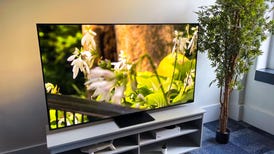
A 55-inch rear projection TV from start-up MicroDisplay. (File photo from April 2007.)

(Credit: Erica Ogg/CNET News.com)

That could be a death knell for the format. Other companies, most notably Hitachi and Sony, have already killed their projection TV lines.

"We were interested in the business until the end of last year," said Makato Ebata, CEO of the consumer business group at Hitachi.

Projection TVs, which blast images onto a big screen with the help of microscopic mirrors, have great picture quality and aren't too expensive. However, they are big. Most manufacturers have sold them only in the U.S.

Markets like those in Japan and Europe don't have the oversized family rooms to accommodate projection TVs.

Samsung came out with thinner versions of projection TVs last year, but they haven't sold well. The TVs are cheaper than LCDs of similar size, but are thicker.

"Do I pay a little more to get thin?" Lee said.

Last month, Sony said it will no longer make rear-projection TVs in order to focus on LCD and OLED technology.

Recent posts from News Blog
Dell to cut XPS gaming desktops, embrace Alienware
For Hezbollah, it's fiber warfare
Apple to highlight iPhone platform development at WWDC
Texas to force Amazon into sales tax collection?
Why does the media love Apple and trash Dell?
Add a Comment (Log in or register) 9 comments (Page 1 of 1)
Probably right, however...
by jmuma January 8, 2008 9:05 AM PST
What is the average depth of the av receiver, dvd player, satellite box? 14-16" maybe. What is the average depth of a entertainment center / tv stand that can hold all these components? 20-22" maybe. What is the size and price of my 65" mitisubishi DLP tv? 58.5" x 40.8" x 19.8", 99 lbs, $2100. What is the size and price of a 65" sharp LCD flat screen tv? 60.5" x 40" x 16" (4" deep if wall mount), 121 lbs (110 lbs wall mount), $6000. Think about that.
Reply to this comment View reply
Maybe fading but
by danunson January 8, 2008 12:08 PM PST
I agree with jmuma above. I have a 52" Toshiba DLP that I have had for over 2.5 years and have not replaced a bulb nor have I noticed any degradation of my picture and I can view from horizontal angles quite well (however not vertically). I can also use it with lots of light in the room and still get good black levels. I have great picture from over the air or satellite HD broadcasts and from my up-converting DVD player hooked up through the HDMI input. I've got nothing but praise for the DLP technology and whether or not it was 4" or the 20" in depth that it is would not matter a whit in my entertainment center as the depth of my other components have the center at plenty of depth to hold it already anyway.
Reply to this comment
New Tech vs. good tech
by whoperson January 8, 2008 2:22 PM PST
It's true that RPTVs are probably on their way out. But I recently looked at a lot of different HDTVs. Initially I thought I wanted an LCD or Plasma, but then I saw some RPTVs and noticed how much thinner they have gotten, so I started looking at them as well. To my eye, the picture on the Sony A3000 series sets was the best of ANYTHING I saw, so that's what I got. When you go into the store, the sales drones push the new tech because "new" is sexy and has a higher mark-up. In the stores I visited the Plasmas and LCDs were in front, while the RPTVs were hidden in the back. But just because a technology is older doesn't mean it can't be better than the "new" technology.
Reply to this comment
Rear Projection TV
by barryr1dog January 8, 2008 4:11 PM PST
I purchased a DLP rear projection TV early last year. It is great, excellent picture quality and can be clearly seen from all angles unlike the old style which you had to sit directly in front of to see the picture. I see the main reason that companies don't sell many is that they don't advertise them. I see retailers are also very hesitant in advertising this product. I suggest there is more to this, I would not be surprised if the company's are streamlining their products and are using the argument that no one is purchasing these products. Well if no one knows about them then no one is going to buy them. SWLAK
Reply to this comment
Powered by Jive Software
  • About News Blog

  • Recent posts on technology, trends, and more.

Add this feed to your online news reader
Google
Yahoo
MSN

Latest from News.com

Featured blogs

Beyond Binary by Ina Fried A look at how technology is changing our lives and at the people behind all that life-changing stuff.

Coop's Corner by Charles Cooper Charles Cooper weighs in on Silicon Valley hijinks, and he doesn't suffer fools gladly.

Defense in Depth by Robert Vamosi Covering the latest in computer viruses and computer crime.

Geek Gestalt by Daniel Terdiman At the tech culture nexus of video games, fire art, and virtual worlds.

Green Tech Fresh green tech news and commentary.

One More Thing by Tom Krazit Tom Krazit takes on the tech phenomenon that is Apple, and keeps a close watch on the chip industry.

Outside the Lines by Dan Farber When business and technology meet, that's when things get interesting.

The Iconoclast by Declan McCullagh Exploring the intersection of politics and technology.

The Social by Caroline McCarthy Exploring all facets of social media and tech culture.

Underexposed by Stephen Shankland Coverage of digital photography, science, and open-source software.

advertisement
Click Here
On TechRepublic: 10 ways users mess up their computers
Advanced
search
Advanced
search
Visit other CNET Networks sites: