October 17, 2007 12:50 PM PDT

iPhone, you'll be a computer, soon

Starting February, you'll finally be able to call the iPhone a mobile computer.

Ever since Apple let the iPhone loose in late June, most of the criticism around the device (forget about AT&T and the price cut for now) has centered on the company's decision to shut developers out of the iPhone's early life on this planet. CEO Steve Jobs tried to assuage developers by reminding them that they could create Web applications for the iPhone, which is sort of like telling a teenager that no, you can't have a car, but isn't this the nicest bike you've ever seen?

But Jobs didn't just roll into the Valley last year with $10 million in Series A funding. The PC and the Mac would have never changed our lives to the extent they have unless Microsoft and Apple allowed third-party application developers to create the myriad programs that simply couldn't be envisioned or tackled by those two companies. It's just not possible for one organization to envision everything that you or I might like to do with our computers.

In an inevitable move, Jobs revealed the plan for third-party iPhone applications on Wednesday. Come February, budding iPhone developers will be able to obtain a software development kit that will give them the tools and the know-how to create safe and reliable applications for the iPhone without having to depend on "jailbreak" programs. That means iPhone users will be able to add applications they can trust without voiding their warranties.

The only thing unexpected about this development is the timing. Some thought an SDK would arrive as early as this month, while others (including yours truly) didn't expect Apple to provide an opening into the iPhone until next year's Worldwide Developers Conference in June.

The reason it's taking so long, according to Apple, was that the company wanted to find a way to be as "open" as possible to third-party development while still keeping a lid on viruses and malware that could kill the iPhone before it gets off the ground. The iPhone runs OS X, which is essentially a derivative of Mac OS X with all the parts you don't need on a phone stripped out to make the software smaller and easier on your battery. There are tested and proven Unix fundamentals at the core of OS X, but Apple apparently felt it couldn't guarantee a reliable experience on the iPhone until it made sure that no security holes had been created in the development of the mobile operating system.

Apparently, that fear will be settled by February, when Apple will either ship OS X 2.0, borrow technology from Leopard to make the iPhone more stable, or both. Jobs hinted that developers will probably have to adhere to some sort of digital-signature architecture, similar to one Nokia has in place, to create working applications for the iPhone. We'll have to see if that passes muster with the development community, although some developers seemed happy with the compromise between developer-signed applications and a locked iPhone. However, as we've followed, some people simply couldn't wait to get started.

Almost immediately after iPhone Day, hackers got to work "jailbreaking" the iPhone, or opening it up so third-party applications could be developed and installed on the device. Dozens of small, useful applications sprung up overnight as enterprising developers came up with new ways to use the iPhone.

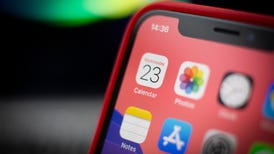
Apple is almost ready to let iPhone users add applications to that blank space beneath the clock and calendar buttons.

(Credit: Corinne Schulze/CNET Networks)

The problem was Apple never authorized this, and actually said quite specifically in the iPhone's user agreement that loading third-party applications onto the iPhone was a violation of that agreement and would void the warranty. It reinforced that notion with the now-infamous 1.1.1 software update, which wiped the iPhone clean of any third-party applications.

Outrage spewed forth onto the Internet, labeling Jobs and Apple as control freaks bent on infiltrating every portion of your computing life and stamping it with a once-bitten apple. As the always-entertaining Macalope put it today, "Well, NOW what is everybody going to complain about?"

This SDK will change the way people think about the iPhone. Research In Motion and Motorola will be able to port the BlackBerry and Good Mobile Messaging software to the iPhone, allowing secure access to corporate e-mail. Browser developers will be able to release products with Flash or Java support and really bring the full Internet to your pocket. And some independent developer toiling away in his or her basement on weekends will come up with a totally new application that takes advantage of the touch-screen interface to do something really cool, and start a business around that software.

One thing the SDK probably won't support is unlocking, at least just yet. I e-mailed an Apple representative to ask that question, and haven't heard back yet. But I can't imagine that AT&T is ready to allow unlocking (not that they'd ever be if they really had a choice). Reports have put the exclusive contract between Apple and AT&T at anywhere from two years to five years, so it's unlikely, but not impossible, that Apple will authorize iPhone unlocking with the SDK.

In many ways, that's a shame. Someday we'll look back on this era of carrier control as ridiculous: can you imagine if your cable or DSL provider currently dictated which PC you could buy, and if you then moved your PC to a part of the country or world where that service was unavailable, you couldn't hook it up to the Internet? But it's a classic dilemma between working for change within the system and revolution, and controlling entities with the power of wireless carriers tend to frown on revolutions.

Expect the underground hacking efforts to continue up to and past the point when Apple formally releases the SDK, as there will probably be demand for unlocked iPhones until the day Apple releases a version for other networks. Just as the company knew that one day it'd have to open up the iPhone to other applications, at some point it's going to have to target the segment of the population that wants nothing to do with AT&T, O2, Orange and the other exclusive iPhone partners.

We're not there yet. I've kept coming back to one thing as this whole outcry over the iPhone and third-party applications has unfolded: We, as a society, have the attention span of gnats. Not only do people want an iPhone, they want it to do everything they want it to do when they want it to do those things, and anything less than instant gratification is a slap in their faces by an evil overlord insisting there be no fun of any kind.

I know, I know; I'm only the 38 millionth curmudgeon to complain about that. But look, people: new eras of computing take time to evolve. It's the 1980s all over again, only this time we can carry these things in our pockets. Real people, not just gadget freaks and productivity-obsessed managers, are starting to realize what they can do with the Internet and computing power anywhere at any time.

The iPhone may not be the device that gets us there, but it's doing more to spark conversation and development toward that goal than anything else out there right now. Starting next year, it will get a whole lot more interesting, especially if Apple finally decides to install a nice, fat 3G pipe to the outside world.

Recent posts from One More Thing
Apple to issue refunds for Powerbook, iBook replacement power adapters
The Open Computing experiment begins
AMD tears up server road map to push stability
AT&T: No vacation around the iPhone anniversary
'Consumer Reports': Apple tech support is aces
Add a Comment (Log in or register) 34 comments (Page 1 of 2)
Well that's great...
by firstlast October 17, 2007 1:50 PM PDT
I would like to see pocket versions of some programs to appear on iPhone ... for example light version of Pixel image editor, what is a Photoshop clone. http://www.pixelimageeditor.com
Reply to this comment View reply
What will the fees be?
by Vegaman_Dan October 17, 2007 2:04 PM PDT
If Apple is going to control the third party software development by using Digital ID's for the software, I wonder what sort of licensing fees they will charge the developers. It's an opportunity for Apple to extract yet more money from the device, so I really don't see them letting this go out for free. I could be wrong- we won't know for sure until Februrary when they release the SDK.
Reply to this comment View reply
Mac OS X...
by DraconumPB October 17, 2007 2:09 PM PDT
Well, shoot, they let people write software for Mac computers don't they? What is so intrinsically different about the iPhone that makes it so much more susceptible to all that 'malware'? Is it that it's such a problem on Macs that they wanted to spare the iPhone from experience such horrors? And what about Flash? Jeez, even the PSP browser lets you use Java and Flash... of course the PSP is just FULL of malware, yup. Apple gives me a new reason to loathe them every single day. I wonder what happened, I used to think they were brilliant..
Reply to this comment View reply
STOP!!
by alb203 October 17, 2007 2:17 PM PDT
All I have to say is will all the Hippies, Beatniks, and people living in their parents basements please stop saying I used to have respect for Apple but now their as bad as M$crosoft. Just stop pleasssssssssssseeeeeeeeeeeeeeeeeeee............
Reply to this comment View all 3 replies
Newton 2.0 Timing?
by edgedesign October 17, 2007 3:07 PM PDT
Could it be that Apple is also developing a slightly larger iPhone/touch-like device that would offer even more functionality (a Newton 2.0 of sorts) as rumored? Imagine if it was announced at MacWorld in January and shipped in February. Apple could release an SDK and distribution system suited for all Apple handhelds around the same time. Even if this new gadget isn't announced in January, I'm pretty sure there is something in the works and the SDK would be very similar across all these devices.
Reply to this comment
The Platform
by Jesse Chan October 17, 2007 3:15 PM PDT
Apple is adding another platform to their mix: http://fishtrain.com/2007/10/17/the-platform-is-what-matters/ Will it make them unstoppable?
Reply to this comment View reply
unlocking the phone
by problemfree October 17, 2007 3:17 PM PDT
I thought that it was made law that all companies were required to unlock the phones period.
Reply to this comment View reply
What about the AppleTV?
by SpiritWater October 17, 2007 3:29 PM PDT
A Newton 2.0 or MessagePad 2.0? Sure, why not. Maybe in the Tablet form too. All this attention on the iPhone and its little brother (iPod Touch) has distracted attention away from the AppleTV. An SDK needs to come out for that system as well. iTunes Wi-Fi store should have rolled out for it by now. Where are the games for this Apple Console. Where's Safari for AppleTV? Come on Apple, finish your hobby project.
Reply to this comment View all 3 replies
maybe the iEye will see the light of day
by lecorbu04 October 17, 2007 4:12 PM PDT
check out the concept: http://www.createthefuturecontest.com/pages/view/entriesdetail.html?entryID=365
Reply to this comment
Forget iFruity, get Neo 1973 from openmoko.com
by jjoensuu October 18, 2007 12:05 AM PDT
bah real hackers work on a Neo 1973 from openmoko.com instead of this commercial pile of hype.
Reply to this comment View all 2 replies
1 | 2 | Next 10 Comments >>
Powered by Jive Software
advertisement
  • About One More Thing

  • At the start of the 21st century, there's no tech outfit more influential than Apple. CNET News.com's Tom Krazit will attempt to make sense of the rumors, hype, products, and people that will shape the future of the company. But Apple's not the only game in town, as the established cell phone companies strike back against the iPhone, and chipmakers try to figure out how to move past PCs and slip into a little something more comfortable.
    Email Tom at Tom.Krazit@cnet.com.

Add this feed to your online news reader
Google
Yahoo
MSN

Stuff I'm reading:

Blogroll

Latest blog posts from News.com

Featured blogs

Beyond Binary by Ina Fried A look at how technology is changing our lives and at the people behind all that life-changing stuff.

Coop's Corner by Charles Cooper Charles Cooper weighs in on Silicon Valley hijinks, and he doesn't suffer fools gladly.

Defense in Depth by Robert Vamosi Covering the latest in computer viruses and computer crime.

Geek Gestalt by Daniel Terdiman At the tech culture nexus of video games, fire art, and virtual worlds.

Green Tech Fresh green tech news and commentary.

Outside the Lines by Dan Farber When business and technology meet, that's when things get interesting.

The Iconoclast by Declan McCullagh Exploring the intersection of politics and technology.

The Social by Caroline McCarthy Exploring all facets of social media and tech culture.

Underexposed by Stephen Shankland Coverage of digital photography, science, and open-source software.

advertisement
On TechRepublic: Top 5 operating systems you never used
Advanced
search
Advanced
search
Visit other CNET Networks sites: