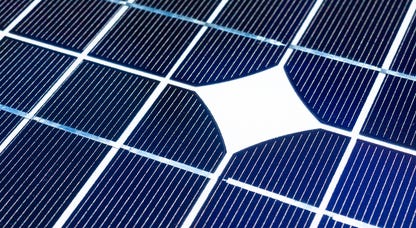
Creating power out of thin air

Syrdec is swinging for the fences when it comes to alternative energy.

The Princeton, N.J.-based company is working on a material that, when combined with another substance, will generate electricity with ambient room heat, Andrew Surany, the company's president, told CNET News.com this week.

Conceivably, one could take that material and fashion it into a passive fuel cell that can create power by just sitting in an ordinary room heated to about 72 degrees Fahrenheit, leading to self-charging electronic devices.

"It derives heat from the environment" and converts it to electricity, Surany said. "I'm talking about embedding cells into doors or the panels on a car. In a laptop, I am talking about embedding cells into the case."

And no, it won't suck out all the heat like some freakish invention from Mr. Freeze on the old Batman show. As long as the sun doesn't explode or Earth doesn't get plunged into nuclear winter, it conceivably could produce electricity without effort indefinitely.

Theoretically, one could heat the material, too, to get better results. If you heated one square meter of the material to 100 degrees Celsius, or the boiling point of water, the material could absorb 1.2 kilojoules of heat energy. Converting 5 percent of that heat to electricity would give you enough energy to power a car, Surany asserted.

So how does it work? Syrdec is trying to combine something called the Seebeck effect and the product of nuclear fusion. In the Seebeck effect, electric current can be generated from temperature differentials. Put metals or semiconductors near each other that exist in radically different energy states and you get power. It's not just theoretical: Germany's EnOcean, another energy-harvesting specialist, has come up with sensors that get power from the temperature differentials between the interaction material that makes up a pipe filled with hot gases and a material heated to room temperature.

Now the nuclear fusion part: Syrdec says it understands a way to artificially alter the natural energy state of a particular undisclosed material. Instead of being in a "normal" energy state at room temperature, the altered material is in a normal energy state at, hypothetically, minus 40 degrees Celsius or colder. Thus, when this material is put into a room-temperature environment, it's excited. Put that next to a material with a much higher natural energy state and you get the Seebeck effect.

"We are looking to create an artificial energy state inside the molecular structure of the substrate," Surany explained. "The materials are unique and specialized. They were brought to our attention through nuclear fusion research."

Outlandish as it sounds, the CEA, the atomic energy agency of France, has already concocted a microgenerator that can produce electricity at ambient temperatures via the Seebeck effect. The thermoelectric generator in CEA's prototypes has an output of 4 milliwatts per centimeter square for every (Celsius) degree difference between the two materials. The India Institute of Science also has examined ways of generating power via the Seebeck effect with changes in pressure.

Syrdec's fuel cell doesn't exist yet, but theoretically it's possible, Surany said. (The material altered by nuclear fusion, by the way, isn't radioactive.) Even if one can be made, there are other complications. How small could such a fuel cell be? How does it do with recharging?

Although the fuel cells would ultimately produce electricity by just sitting around, producing the materials for the fuel cells takes a lot of power. "Manufacturing is energy-intensive," Surany said.

More from News.com on this story's topics

Environment and Energy

Create an email alert | RSS feed

Fuel cells

RSS feed

Science

RSS feed

See more CNET content tagged:
fuel cell, fusion, electricity, material, energy

27 comments (Page 1 of 2)
Wide Range
by micahlandis October 26, 2007 12:12 PM PDT
I live in Vegas, you place this on car covers and roofing tiles you could power houses and plug in hybrids. Pretty sweet deal.
Reply to this comment
only time will tell
by chuchucuhi October 26, 2007 12:13 PM PDT
Well hopefully something comes of this it seems like it would be nice enough to add to the global alternative energy basket. I guess everything will just keep chiseling away.
Reply to this comment
No freakin' way
by Harlan879 October 26, 2007 12:17 PM PDT
This clearly violates the laws of thermodynamics. And the "altering the energy state" thing sounds like magic, and not in a good way. This is flat impossible. Next time, CNet, how about calling a physicist before reporting on this woo? I wonder if you're not being used to perpetrate stock fraud or something...
Reply to this comment View all 4 replies
Snake oil, anybody?
by alegr October 26, 2007 12:20 PM PDT
This conpany will indeed succeed in generating... money from the investors' pockets. Don't expect anything else, though.
Reply to this comment View reply
Sony exploding batteries perfect for maximum heat...
by basraw October 26, 2007 12:33 PM PDT
All those sony batteries would be perfect for heat generation.
Reply to this comment
This is complete baloney
by gatornuke October 26, 2007 2:49 PM PDT
As a nuclear engineer, I'd have to say these claims are absolutely ridiculous. When you fuse Triutium and/or Deuterium you could get He5, He6, or He7. He6 and He7 have very short half lifes and eventually decay into Li6. He5 decays into He4 almost imediately. There's nothing magical here that can make electricity out of nothing. You can get power through temperature differentials, like with RTGs, but the key word here is "Differential" If the whole system is at room temperature and nothing is producing heat (like through nuclear decay) there's no differential. Conventional power plants also get power from heat through the rankine cycle, but again you need a fairly high heat source. It seems to me these people are trying to defraud someone.
Reply to this comment View reply
"Imagine a material that can suck..."
by troppp October 26, 2007 5:35 PM PDT
I think this is achievable.
Reply to this comment
Somethings wrong
by Travis Ernst October 26, 2007 6:59 PM PDT
the rough concept sounds like the reverse of heat sink (that uses energy), those of you who have used that to cool off sensitive parts on boards will know what component I am talking about. In rare cases you need to keep parts warm when in cold environments. Somethings not quite right about this story, there is something missing for it to function properly, if the story is legit.
Reply to this comment
Saw this...On Stargate..pfft!
by krosavcheg October 26, 2007 8:46 PM PDT
Artificial thermal state? Isn't that like making jello in the fridge and then putting it on the counter and claiming it's still at 45 degrees a couple of hours later because it's still solid? No, these clowns need to go back to high school and study thermodynamics
Reply to this comment View reply
Thin Air
by spothannah October 27, 2007 4:12 AM PDT
I think I read something about perpetual motion machines. Hmmm... Like they don't exist? Hey? Where's my free lunch?
Reply to this comment
1 | 2 | Next 10 Comments >>
Powered by Jive Software
advertisement
RSS Feeds
Add headlines from CNET News.com to your homepage or feedreader.
Google
Yahoo
MSN
More feeds available in our RSS feed index.
Today's Top Stories
GM keeps building cars on XP
GIS exec works to unlock hidden geo data
Hackers go after restaurants, markets
EarthLink ditches Philly Wi-Fi network
Craigslist files lawsuit against eBay
Most Popular Stories
Welcome to the social mess?
HP in talks to buy EDS
HP to acquire EDS for $13.9 billion
'Grand Theft Auto IV' nets Guinness record
Mac Office sales soar on Apple's gains
Markets

Market news, charts, SEC filings, and more

Related quotes

Dow Jones Industrials (-0.34%) -44.13 12,832.18
S&P 500 (-0.04%) -0.54 1,403.04
NASDAQ (0.27%) 6.63 2,495.12
CNET TECH (-0.06%) -0.99 1,744.82
  Symbol Lookup
Detroit auto show
Detroit auto show

Detroit auto show
advertisement
On TV.com: MILEY CYRUS photographs
Advanced
search
Advanced
search
Visit other CNET Networks sites: