September 25, 2007 4:00 AM PDT
Cutting solar panels' high price tag
- Related Stories
-
CEOs, Ted Turner, Larry Hagman gather for solar fest
September 24, 2007 -
Does the solar industry need a Salesforce.com?
March 30, 2007 -
Breaking the mold in solar power
February 21, 2007 - Related Blogs
-
Love or hate it, solar challenger Citizenre hits delays
July 24, 2007 -
MMA Renewable Ventures finances energy efficiency
May 31, 2007 -
Solar City: Solar to get more expensive before it gets cheaper
September 6, 2007 -
Solar service firm Tioga Energy gets funding
June 6, 2007
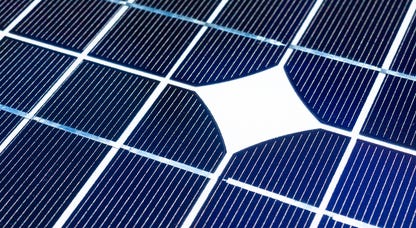
A number of companies, from installers to panel producers, are taking different routes to try to improve the economics of purchasing rooftop solar panels.
Bringing down the high costs of solar compared to other forms of power is one of the big areas of discussion planned for the Solar Power 2007 conference in Long Beach, Calif., which starts Tuesday.
Installer Akeena Solar on Monday announced Andalay, a panel that it says is more attractive and quicker to install. It is scheduled to further detail the panels, which use 70 percent fewer parts, at the conference.
Panel manufacturer Sharp Solar, too, is expected to detail a mounting and panel system meant to streamline the process of installing panels, and thus lower the costs. Similarly, solar companies are working with builders to pre-install panels or power-producing roof shingles on new homes.
In addition to hardware improvements, solar companies are trying out new business models to make the jump to solar power easier on the pocketbook.
A San Francisco-based start-up, Sun Run, is borrowing a financing model commonly used in the commercial market and applying it to residential customers. On Monday, it announced that it has signed on REC Solar as another installer.
Sun Run's business model is structured around owning the panels on people's homes. So instead of paying all the money to install panels, the homeowner pays for the electricity they produce at a fixed rate.
"We've found that most people are really interested in going green but they also have economic focus in doing it," said Sun Run President and Chief Operating Officer Nat Kreamer, who founded the company earlier this year.
Even though much of the media coverage around solar power focuses on the incremental improvements of converting sunlight to electricity, the actual work of installing photovoltaic panels remains 30 to 50 percent of the total cost.
Sun Run's contract--called a purchased power agreement--won't eliminate the initial cost of getting solar electricity. But it will reduce by about 60 percent the pain of shelling out anywhere from $20,000 to $35,000 for solar panels, according to the company.
Working solar incentives
Sun Run is focusing specifically on California, where people pay different rates depending on how much they consume. But financing is increasingly being recognized as an important part of the solar power puzzle.
Sun Edison and MMA Renewables are two companies that specialize in providing financing and solar power installations for commercial customers.
Other installation firms with similar models have recently received venture capital funding, including Solar City, Tioga Energy and, according to reports, Solar Power Partners.
Solar City's twist on solar installation is group buying. The company canvasses residential neighborhoods. When it gets 50 or so committed customers, it purchases the panels and then sends out teams of five or so installers to erect them. Volume discounts and concentrated installation leads to a reduction of about 20 percent in the overall cost, according to the company.
Purchase power agreements are mainly used in the commercial world. Companies that offer them own and maintain solar photovoltaic panels on customers' rooftops and sell the electricity back to the customer.
In addition to avoiding a large capital outlay for the solar panel installation, customers fix into an electricity rate and thereby get a hedge against rising prices.
"Any way you can use renewables to guarantee stable power prices, allowing homeowners or large industrial customers to fix their power and fuel costs, is a good step forward and an effective way to bring renewables to a broader market," said Alex Klein, an analyst at Emerging Energy Research.
Sun Run's Kraemer said that his company's attempt to bring purchase power agreements to the residential field has met with a good amount of skepticism.
That's in part because electricity is so price sensitive that it leaves little room for a profit margin. Skepticism may also be fueled by the experience of Citizenre, a company that has been signing on homeowners for solar panels with a nominal up-front fee but has yet to deliver on its promises.


In any given day that you are home how many people that have installed photovoltaic panels on their roof actually feed power back to the grid?
How much did your panels battery installation and all cost to deploy residential solar cost?
The answers to these simple questions is why rofftop solar will not work and why many who would like to go solar stay away. We can remove that hurdle. Saying a system is almost worthwhile because incentives from tax dollars reduce the cost is not helping the planet or our taxes.
If the installation is easy enough, then simply open it up for Do-It-Yourself homeowners then have the city inspect and approve such installations.
As it is, only trained and licensed contractors can install solar panels, and thus they are the only ones who benefit from any advancement in the ease of installations. These savings have never been passed on to consumers. In fact that the solar panels became easier to install, that the solar panel companies will charge more because of the perceived savings in the installation, but heck, no way, it will end up costing more because the savings are not passed on, and the new higher prices will make it cost more.
Open it up to Do-It-Yourself homeowners, a large majority of us are smart and highly skilled, we are not dumb people, we can build more complex projects than solar installation. This in hope will pressure the contractors to really lower their prices when they have real competition from DIY. The improvement of the ease of installation of the solar panels as these various manufacturers have stated, will never result in price reduction unless real competition is brought in.
I do not support nor go against the use of solar panels on residential roofs.That is another big issue for debate.
Without the governmental incentives solar just doesn't usually make "economic" sense. The reason Google and Walmart determine that after 30% back from the Federal government and nice subsidies from California that will diminish over the life of the program that acting sooner made more sense. It actually did make economic sense with a payback period of approx. 7 years if I recall and would have a beneficial PR impact. For businesses the 30% is uncapped, poor individuals maximum credit is $2000.
Hopefully as solar scales up it's price will continue to drop to the point where it is competetive with purchased power. Thin film should come down significantly and if you could replace shingles with a thin film installation the labor cost impact on solar would be significantly diminished.
Keeping my fingers crossed.......
seabiscuit
www.scottpelham.com
I just bought a house in Cape Coral, Florida and will be moving within the next 60 days. What is the best use of a house roof for solar energy today and what federal, state, county, and local grants are still there for ?ecogeeks? like me to reduce the cost of ?going solar? by use of solar units on the roof of their home?
I want to start as soon as I get to Cape Coral, Florida next month.
Thanks and regards,
Dwight
Dwight M. Lee
(Until July 1st)
3 Village Hill Lane #1
Natick, Ma. 01760-5724
(After July 1st)
3321 S E 10th Avenue
Cape Coral, FL 33904-4714
Cell = 508 801 5170
Home = 508 309 4874
Fax = 508 635 0049
Sr. Consultant
IBM Global Business Services
Distribution Sector
Supply Chain Management Practice
Access Line Tel/Fax: 781-253-3203
Tie Line: 3648889
Mobile: +1-508-801-5170
leemd@us.ibm.com