- Related Blogs
-
Spy chief: Expanded U.S. snooping law aided German terror arrests
September 10, 2007 -
Spy chief: Oops! FISA changes didn't aid arrests
September 13, 2007 -
President Bush rallies for immortal spy law changes, telco protection
September 20, 2007
A new proposal that House Democrats released this week called the Restore Act would impose some additional privacy safeguards and oversight on a shadowy court that meets behind closed doors to approve foreign surveillance requests. The current version of the Restore Act does not immunize either telephone or Internet providers.
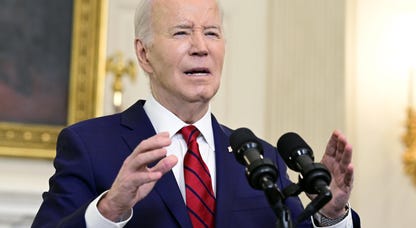
In remarks to reporters at the White House on Wednesday, President Bush stressed that the immunization requirement was non-negotiable. "It must grant liability protection," he said, "to companies who are facing multibillion-dollar lawsuits only because they are believed to have assisted in the efforts to defend our nation following the 9/11 attacks."
Without that requirement, Bush said, he would not sign a bill into law.
After news reports said AT&T and other major telecommunications carriers opened their networks to the National Security Agency after September 11, 2001, dozens of civil lawsuits have been filed against them. When the 9th Circuit Court of Appeals in San Francisco heard arguments in a pair of cases in August, the judges indicated they were likely to let the lawsuits proceed. A decision is expected at any time.
Although a former AT&T employee has alleged the company let the NSA set up shop in a San Francisco switching center, the company has refused to confirm or deny its involvement. Its attorneys have referred, however, to secret legal authorization from the Bush administration that might get the company off the hook.
A survey conducted last year by CNET News.com identified 15 large telecommunications and Internet companies, including BellSouth, Comcast, Qwest Communications International and EarthLink, that said they would not cooperate with the NSA without being compelled by law. Others, including AT&T, would not answer the question.
House Democrats are hoping to move quickly in votes on the Restore Act (PDF), which stands for Responsible Electronic Surveillance That is Overseen, Reviewed and Effective.
Two committee votes were scheduled for Wednesday with the goal of sending the measure to the floor next week. The House Judiciary Committee approved the bill by a 20-14 vote with three Democratic amendments unrelated to liability for telecommunications companies.
The House Intelligence Committee later approved the bill by a 12-7 vote along party lines, rejecting proposed amendments that would have shielded telecommunications companies, according to committee aides.
Should ISPs, telecoms get retroactive immunity?
In a meeting with reporters on Tuesday, House of Representatives Majority Leader Steny Hoyer said that retroactive immunity for telecommunications companies remains a possibility--"it is not off the table"--but warned that Congress needs more information before it would extend such a sweeping liability shield.
"To give immunity at this time would be a blind immunity, not knowing what in fact was done, not knowing what we are immunizing," Hoyer said. "We're obviously very concerned about knowing what they're doing."
The reason why liability protections don't appear in the Restore Act, he said, is that Congress has not received information it needs from the Bush administration to determine how its surveillance programs work and the role that private companies have played in them.
The White House informed congressional staffers on Friday that it intends to "assemble" the documents containing that information by October 22, according to senior House aides. But they didn't actually commit to turning over the documents, and that timeline wouldn't work if the House hopes to vote on the bill by October 17.
In early August, just before Congress left town for a month's vacation, politicians approved a law called the Protect America Act of 2007 that significantly expanded federal surveillance power under the Foreign Intelligence Surveillance Act, or FISA.
That law immunizes telecommunications companies for complying with subsequent surveillance orders, but does not protect them from lawsuits arising from clandestine cooperation with the NSA prior to August. It has been attacked by libertarians and some Democrats for going too far; House Speaker Nancy Pelosi even said the legislation "does violence to the Constitution of the United States."
The Protect America Act expires in February, which means that Congress will feel pressured to enact some sort of renewal during the next few months.
Confronting the Fourth Amendment
Other components of the Democrats' new Restore Act legislation are just as contested. Bush said that in addition to retroactive liability protection, any bill must give the CIA and NSA sufficient "flexibility," and the Justice Department warned of reopening "dangerous intelligence gaps" that existed before the Protect America Act.
On the other side are privacy advocates and civil libertarians, who believe that the Democrats' proposal includes more protections and oversight than current law. Still, they want to amend it to include individual warrants before monitoring Americans' phone calls or e-mail messages.
"The problem in the draft legislation is the yearlong program warrants--sometimes called basket warrants, sometimes called blanket warrants," said Caroline Fredrickson, director of the American Civil Liberties Union's Washington legislative office. "Whatever you call them, there is no target, which goes against the Fourth Amendment. The Fourth Amendment requires individual warrants if Americans are involved."
- More from News.com on this story's topics
Privacy
Federal government
United States
See more CNET content tagged:
immunity,
telecommunications company,
NSA,
telecommunications,
aide
- Know whom you are voting for
- As we struggle to know our domestic enemies. No, matter your political party affiliation, and setting aside your thoughts on issues. We all need to remember what it is to be an American Citizen. We need to make sure our elected representatives obey their Oath of Office and keep their Oath of Allegiance. See http://tinyurl.com/2znnvl Know whom you are voting for.
- Reply to this comment
- Blanket Coverage
- If I come up with a scheme to collect personal information, for whatever slimy reason I might have, and cloak that scheme with a claim that I'm fighting terrorism, then it's all ok with GW? Sure will make it easier to track down all those pesky Muslim-Americans and lock 'em up. The real problem here is we continue to allow government agencies to violate the constitution and our individual rights, and we can't even bring them to task. Sure, give the telecom companies immunity, but grant us the right to sue the government agencies that strong-armed those companies for the information. We can not demonstrate the superiority of democracy over other, more repressive forms of government by allowing our rights to be eroded in the name of the war on terrorism. We can not defend our freedom by eliminating it!
- Reply to this comment View all 2 replies
- minor issue?
- I take offense to your dismissal of civil litigation against telecommunication companies, that may or may not have committed illegal acts, as some kind of "minor issue." You do your reader's a disservice projecting this type of propoganda. Please be more open and fair with your "reporting."
- Reply to this comment View reply
- help
- Can anyone please tell me why in the world we are allowing this to happen? This is like watching the lobster boiled alive.. We are handing over our liberty to the gov't.. How insane is that.. Check Ron Paul for president at RonPaul2008.com. When you trade liberty for security, you lose both.
- Reply to this comment
- How (Not) to Do FISA Reform
- Here is a letter I just sent to Rep. Albio Sires (D-NJ), my elected representative: Dear Rep. Sires, I am a voter in your district, and I am writing in regards to H.R. 3773, the RESTORE Act. I urge you not to support this legislation unless it meets two key conditions. First, the bill must not be amended to grant immunity for telecommunications providers who cooperated with the Bush administration?s illegal wiretapping program. Such a grant of immunity will cut important court cases off at the knees before we can learn the full nature of the administration?s spying. In short, you must not reward the administration for their blatant disregard for the law of the land, including the very balanced Foreign Intelligence Surveillance Act, and you must not reward common carriers for their willingness to join in the illegalities. Bush?s threat to veto the legislation without such a grant of immunity only confirms concerns that the law has been broken. Second, do not approve the bill without all of its current protections for civil liberties. In particular, insist that the bill retain or strengthen the following provisions: ? Section 5, requiring oversight and periodic audits of surveillance activities ? Section 7, requiring the Department of Justice to conduct a timely audit of all warrantless surveillance programs since September 11, 2001 ? Section 8, requiring record keeping of all surveillance of United States persons ? Section 10, reiterating FISA as the sole legal justification for the gathering of electronic surveillance Not incidentally, the Bush administration?s willful disregard for FISA is an impeachable act if ever there was one, but sadly it is not the only one committed in the past seven years. Speaker Pelosi may consider impeachment to be off the table, but I do not, and if you and your colleagues do not stand up for the Constitution, I fear for the future of our democracy. As cross-posted on Shouting Loudly: http://www.shoutingloudly.com/ 2007/10/10/how-not-to-do-fisa-reform
- Reply to this comment
- They Broke the Law
- The communications companies in question broke the laws and the Constitution of the United States at the time of occurrence. No company or entity should ever be allowed to break such laws and be retroactively granted a blind blanket immunity for such action. Are you listening, Congress ? And why does Mr Bush and his administration insist on holding up new laws with threats of vetoes in and effort to bully our Congress into granting these companies immunity ? Does Mr Bush hold a large share of AT&T stock or something ? Non of these people are doing their sworn duty to uphold the Constitution of these United States. We need someone who is capable of getting them all fired from their jobs to speak up now. As a constituent, I place my vote.. they are all fired, effective immediately.
- Reply to this comment
... or log in manually to your email client and click the link in our email. Once you have confirmed your registration, please log in.